

USA Flights Grounded Nationwide: What Caused the FAA Shutdown?
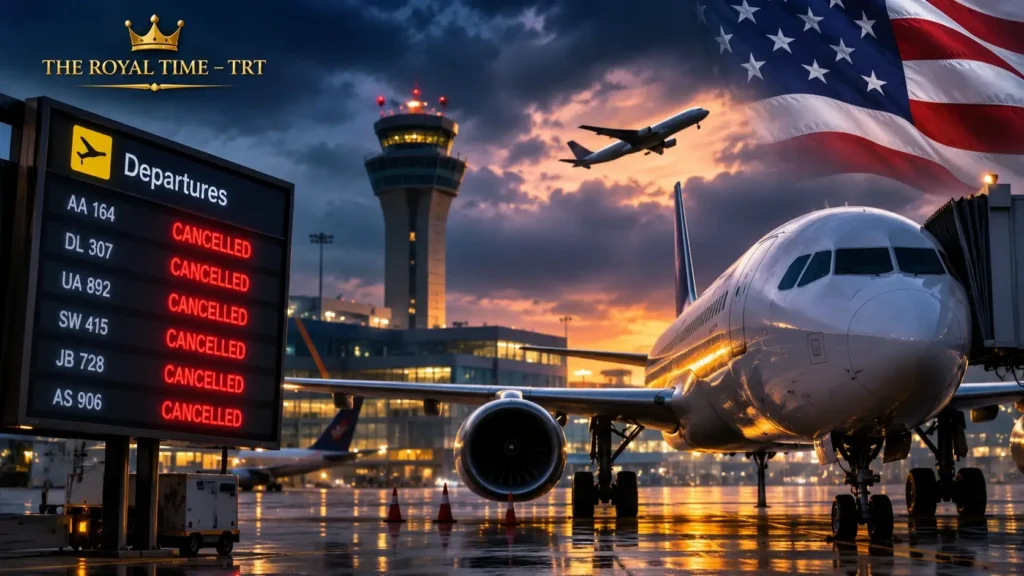
Thousands of flights were canceled, airports faced major disruption, and passengers across the United States were left stranded after a rare nationwide flight ground stop on November 13, 2026.
The Federal Aviation Administration (FAA) ordered a temporary halt to departures after serious telecommunications problems affected critical air traffic control systems.
The disruption lasted more than four hours, creating delays and cancellations across America’s aviation network.
Although the FAA lifted the nationwide ground stop on Friday evening, airlines continued struggling to restore normal schedules throughout the weekend.
So what caused the shutdown, why did a technical problem affect airports across the country, and what does the incident reveal about America’s aviation infrastructure?
What Happened to US Flights on November 13, 2026?
On Friday afternoon, November 13, the FAA ordered a nationwide ground stop after communications and radar systems experienced instability.
Air traffic controllers rely on these systems to monitor aircraft, coordinate flight movements and maintain safe separation between planes.
When the reliability of that information became uncertain, aviation authorities decided to suspend departures as a precaution.
The ground stop began shortly before 4 PM Eastern Time and remained in place until approximately 8:15 PM.
Importantly, the nationwide order did not mean that every aircraft already flying suddenly stopped.
Thousands of planes were already airborne when the disruption began. Air traffic controllers and pilots worked to manage those flights safely while departures were restricted.
Once officials confirmed that the affected systems were sufficiently stable, the FAA reopened the airspace and flights gradually resumed.
However, restarting an entire aviation network is far more complicated than simply allowing planes to take off again.
What Caused the FAA Nationwide Ground Stop?
The FAA outage has been linked to problems during an upgrade of the agency’s telecommunications infrastructure.
At a November 14 press conference, US Transportation Secretary Sean Duffy explained that contractor L3Harris had been performing work to replace aging copper communications lines with modern fiber-optic technology.
According to the preliminary explanation, a router involved in the upgrade began generating excessive connection activity.
Officials reported more than 1,000 connection attempts approximately every four to five seconds.
The resulting network overload affected other routers and contributed to unstable communications and radar information.
This created a potentially serious problem for air traffic control operations.
When controllers cannot consistently rely on communications and surveillance systems, restricting flight operations becomes an important safety precaution.
Investigators have not yet established whether the underlying fault resulted from defective equipment, an installation problem or another error associated with the upgrade.
The precise technical cause remains under investigation.
Was the FAA Outage Caused by a Cyberattack?
Following the nationwide shutdown, questions emerged about whether the disruption could have resulted from a cyberattack or interference with aviation systems.
However, officials reported no evidence that a malicious cyberattack was responsible.
FAA Administrator Bryan Bedford also said investigators had found no evidence connecting the incident to artificial intelligence.
The initial findings instead focused on telecommunications equipment and the network upgrade.
That distinction matters because unusual technology failures can quickly generate speculation online.
A serious technical malfunction does not automatically indicate hacking, sabotage or deliberate interference.
For now, the available official explanation points toward an infrastructure failure rather than a security attack.
How Many Flights Were Canceled or Delayed?
The consequences of the FAA ground stop extended far beyond the hours during which departures were restricted.
Flight tracking information reported nearly 9,200 flight cancellations on Friday, November 13.
Additional cancellations continued on Saturday as airlines tried to rebuild their schedules.
By Saturday evening, reports indicated that more than 14,000 flights had been canceled across the two days.
The disruption affected passengers traveling for work, vacations, family commitments and other important journeys.
Major airlines faced complications involving aircraft availability, crew schedules and connecting flights.
A plane delayed in one city may be scheduled to operate several other flights later that day.
When that aircraft fails to arrive on time, the disruption can spread across multiple airports.
Similarly, pilots and cabin crew have regulated working-hour limits. Even after air traffic systems return to normal, airlines may be unable to operate some flights until appropriate crews become available.
This chain reaction explains why a ground stop lasting only a few hours can disrupt travel for several days.
Flight cancellation totals are based on reports available during November 14–15 and may change as airlines update their schedules.
Why Is America’s Air Traffic Control System So Vulnerable?
One of the most significant questions raised by the incident concerns the age and reliability of US aviation infrastructure.
The country’s air traffic control network supports tens of thousands of flights on a typical day.
It combines communication links, surveillance systems, computer networks and coordination between multiple control facilities.
Some components have operated for decades.
The government has been modernizing older systems by introducing new telecommunications equipment and replacing copper connections with fiber-optic networks.
However, upgrading equipment while keeping a national aviation system operational presents unusual challenges.
Unlike a typical website or business computer network, air traffic control infrastructure cannot simply be shut down for an extended maintenance period.
Updates must be carefully coordinated to maintain safety and operational continuity.
The November 13 incident demonstrated how problems during a technology transition can have consequences far beyond the location where maintenance is taking place.
It also highlighted the importance of network resilience, testing procedures and backup systems.
When Did US Flights Resume?
The FAA lifted the nationwide ground stop at approximately 8:15 PM Eastern Time on November 13.
Flights began resuming that evening, although airlines warned that restoring their normal schedules would take time.
On November 14, FAA Administrator Bryan Bedford said officials expected the aviation system to recover by the end of Sunday, November 15.
That was a recovery projection rather than a guarantee that every delayed passenger would reach their destination by then.
Travelers should continue checking their airline’s latest information rather than assuming that reopening the airspace automatically resolves every cancellation or delay.
What Should Passengers Do If Their Flight Was Canceled?
Passengers affected by the FAA disruption should first confirm the status of their flight directly with the airline.
Flight tracking websites can provide useful information, but the airline is responsible for communicating rebooking arrangements and ticket options.
Travelers should consider the following steps:
- Check the airline’s official app or website. Confirm whether the flight is delayed, canceled or rescheduled.
- Review available rebooking options. Airlines may offer alternative flights or waive certain change fees during widespread disruptions.
- Understand refund rights. Under US Department of Transportation rules, passengers whose flights are canceled are generally entitled to a refund if they choose not to travel or accept alternative arrangements.
- Keep travel records. Save booking confirmations, cancellation notices and relevant receipts.
- Avoid unnecessary airport journeys. Verify flight status before leaving home or a hotel.
Refund eligibility and additional assistance are not the same thing.
A qualifying canceled flight may entitle a passenger to a ticket refund, regardless of the cancellation’s cause. However, meal vouchers, hotels and other compensation can depend on the airline’s policies and the circumstances of the disruption.
Passengers should check the Department of Transportation’s official refund guidance for details.
Could Another Nationwide FAA Ground Stop Happen?
The November 13 shutdown has renewed concerns about the resilience of the United States aviation network.
Modern air traffic control depends on reliable communications, surveillance information and interconnected technology.
As more equipment is replaced or upgraded, careful coordination and testing remain essential.
A nationwide shutdown is unusual, but the incident shows that failures in critical infrastructure can produce consequences on a national scale.
Officials have emphasized the need to continue modernizing the system while maintaining aviation safety.
The final investigation may provide further information about what failed, whether existing safeguards were adequate and what additional steps could reduce the risk of similar disruptions.
Frequently Asked Questions
Why were US flights grounded nationwide?
The FAA temporarily halted departures on November 13, 2026, after telecommunications problems affected air traffic control communications and radar systems.
Was the FAA nationwide ground stop lifted?
Yes. The nationwide ground stop was lifted at approximately 8:15 PM Eastern Time on November 13, 2026.
Was the flight shutdown caused by hackers?
Officials reported no evidence of a cyberattack. Investigators instead focused on telecommunications equipment problems during an infrastructure upgrade.
How long did the nationwide ground stop last?
The departure restrictions lasted more than four hours on November 13.
Can passengers receive refunds for canceled flights?
Generally, passengers whose flights are canceled can receive a refund if they decline alternative travel or compensation, subject to applicable US rules and circumstances.
Final Thoughts
The nationwide FAA ground stop of November 13, 2026, exposed how dependent modern air travel has become on reliable telecommunications infrastructure.
A problem during a network upgrade resulted in a temporary nationwide departure halt, thousands of canceled flights and widespread travel disruption.
Although the airspace reopened the same evening, the resulting operational problems continued into the weekend.
For passengers, the incident was a reminder of how quickly travel plans can change.
For the aviation industry, it highlighted the importance of maintaining and modernizing critical infrastructure without compromising safety.
The central question is not simply why flights were grounded, but how the United States can make its aviation network more resilient against future technical failures.
The November 2026 FAA outage may ultimately become an important case study in the challenges of modernizing America’s air traffic control system.
The Royal Time – TRT
Exploring Technology, Science, History and the Events Shaping Our World.